What You'll Learn
There’s more to applying ice melt than simply sprinkling it on a sidewalk and watching the ice melt away. Using the wrong product, applying too much ice melt, or waiting until ice has firmly bonded to the pavement can reduce performance, create unnecessary cleanup, and potentially affect surrounding surfaces or landscaping.
Understanding these common ice melt mistakes can help your facility use its winter maintenance products more efficiently while keeping entrances, walkways, and other high-traffic areas safer.
Common Ice Melt Mistakes
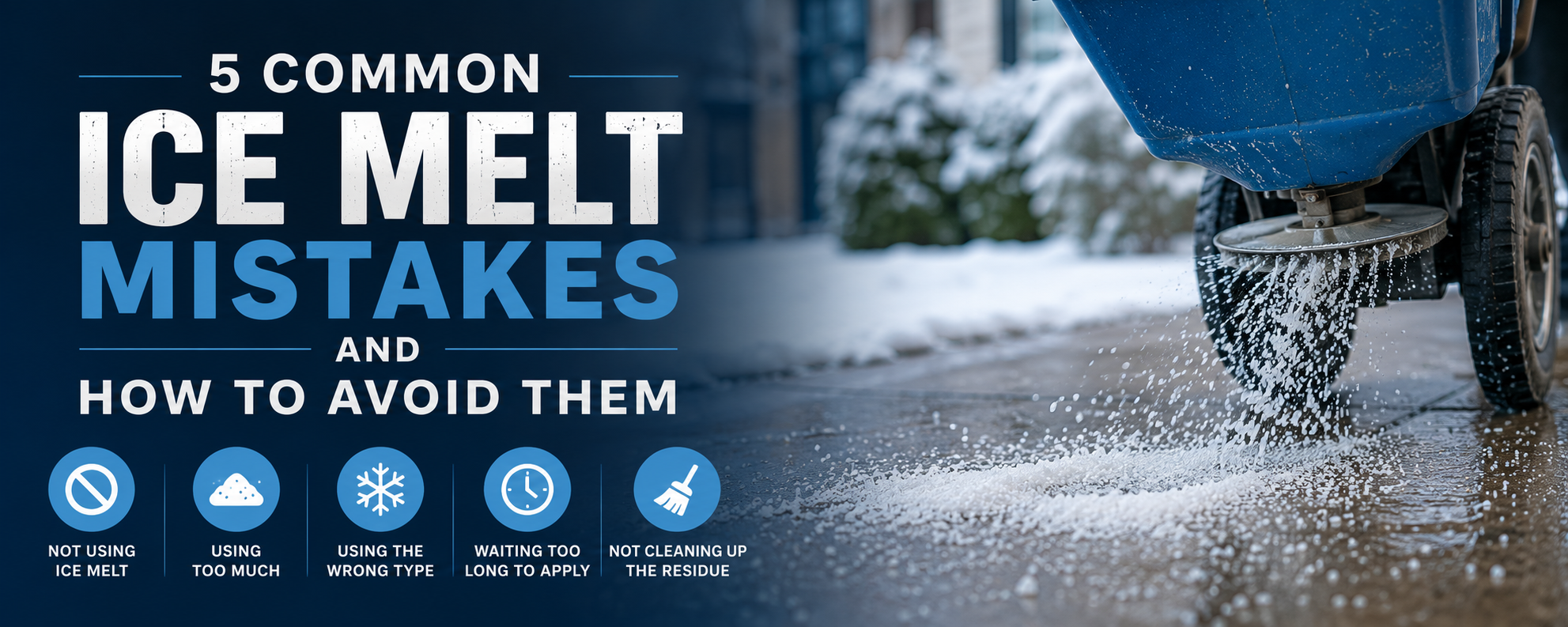
Mistake #1: Not Using Ice Melt at All
One of the biggest ice melt mistakes is simply not using it.
To some property owners and facility teams, purchasing and applying ice melt may seem like an avoidable expense. However, untreated walkways, entrances, parking areas, and loading zones can create unsafe conditions for employees, customers, residents, and visitors.
Ice melt shouldn’t replace plowing, shoveling, or an established snow response plan. Instead, it should be used as one part of a broader winter maintenance strategy. Applying the appropriate product can help loosen bonded ice, improve traction, and make mechanical snow removal easier.
Before winter arrives, review your high-risk areas and make sure you have enough product on hand. Cope offers a range of ice melt products for commercial and facility applications.
Mistake #2: Using Too Much
The more the merrier, right? Not when it comes to applying ice melt.
Less is often more, and a relatively small amount of product can cover a larger area than many users realize. Applying excessive ice melt wastes material and may increase the amount of residue tracked indoors. Overapplication can also expose nearby plants, soil, concrete, metal, and other surfaces to more product than necessary.
Avoid applying ice melt with an open scoop or shovel, which makes it difficult to control distribution. Instead, use a handheld spreader for smaller walkways or a calibrated walk-behind spreader for larger areas.
Always follow the spread rate listed on the product label or technical sheet. Cope’s ice melt comparison chart includes recommended spread rates, temperature ranges, melting speeds, and other information that can help teams apply each product correctly.
Mistake #3: Using the Wrong Type of Ice Melt
Different ice melt products contain different ingredients and have different melting temperatures, speeds, durations, costs, and application strengths.
Basic rock salt may be an economical choice for large areas during moderate winter conditions, but it may not provide the performance needed during extremely low temperatures. Calcium chloride, magnesium chloride, blended ice melts, treated bulk products, and liquid deicers each serve different purposes.
When choosing a product, consider:
- The expected pavement and air temperatures
- How quickly the ice needs to melt
- Whether the area is near plants or landscaping
- The types and condition of the surface
- The level of foot or vehicle traffic
- The likelihood of material being tracked indoors
- Your available application equipment and budget
For example, Cope Performance Blend is formulated for Mid-Atlantic winter conditions and provides performance down to -25°F. Veridion Liquid Ice Melt offers a non-tracking, non-chloride option for entrances and high-traffic environments.
Because every property is different, the lowest melting temperature shouldn’t be the only factor guiding your decision.
Mistake #4: Waiting Too Long to Apply It
Applying ice melt before precipitation begins can help prevent snow and ice from bonding tightly to the pavement. This practice, commonly called anti-icing, can make clearing surfaces easier once the storm is underway.
However, advance application isn’t always possible. Weather forecasts can change, and facility teams may not be able to treat every area before precipitation begins.
Ice melt can still be used after snow or ice has accumulated, but it generally performs best when excess snow is removed first. Shovel or plow the area, then apply an appropriate amount of product to the remaining packed snow or bonded ice.
Avoid assuming one application will last through an entire storm. Monitor entrances, slopes, shaded walkways, drainage areas, and other places where melting and refreezing may occur.
Mistake #5: Not Cleaning Up the Residue
Depending on its ingredients, ice melt can leave residue behind or be tracked into a building on shoes, carts, and equipment.
When material remains on flooring for too long, it may leave a film, contribute to slippery indoor conditions, or dull certain floor finishes. Place durable mats both outside and inside busy entrances to capture moisture and loose granules.
Vacuum or sweep up dry material and follow your flooring manufacturer’s recommendations for damp cleaning. Don’t simply add more water without removing loose residue first, as this may spread it across a larger area.
Unused outdoor product should also be swept up once the surface is clear and dry. Store the recovered product only when it remains clean, dry, and uncontaminated.
Use Ice Melt More Effectively This Winter
Avoiding these common mistakes can help you get better performance from your ice melt while reducing waste and unnecessary cleanup.
The right product will depend on your temperatures, surfaces, traffic, landscaping, and operational priorities. Explore Cope’s complete ice melt selection, or review available salt delivery and pickup options before the next winter event.
Need help choosing the right ice melt for your facility? Contact Cope Company Salt to discuss your application and request a quote.