What You'll Learn
When winter weather arrives, keeping walkways, entrances, parking areas, and other outdoor surfaces clear becomes an important part of property maintenance. Shoveling and plowing remove accumulated snow, but they may leave behind packed snow or ice that has bonded to the pavement.
That’s where ice melt can help.
When the appropriate product is selected and applied correctly, ice melt can make winter maintenance more efficient and help improve conditions around homes, businesses, schools, healthcare facilities, and other properties.
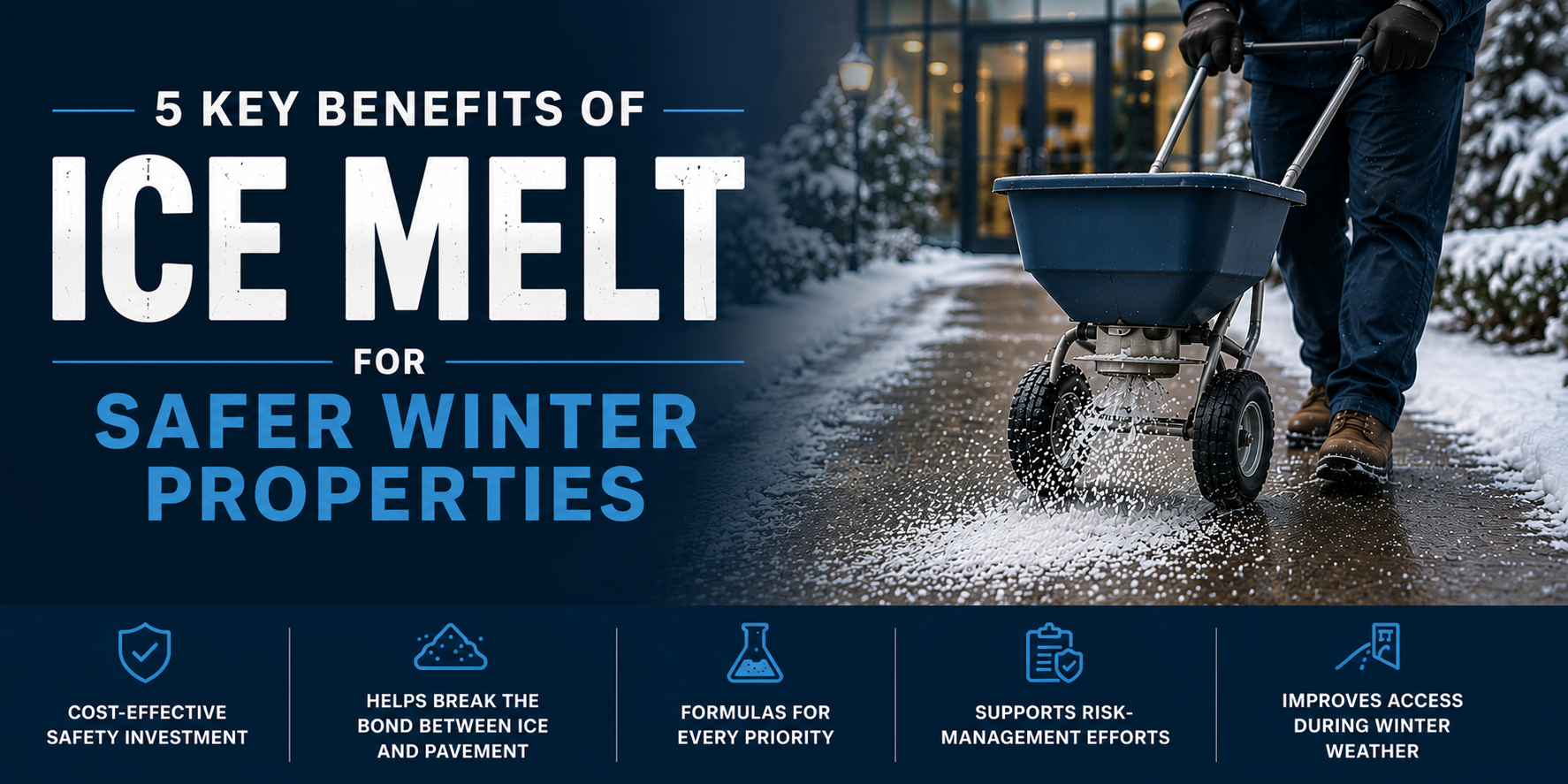
Here are five important advantages of including ice melt in your winter maintenance plan.
Key Ice Melt Benefits
It Can Be a Cost-Effective Safety Investment
Some property owners avoid purchasing ice melt because they view it as an unnecessary seasonal expense. However, untreated ice can create operational disruptions, property damage, and unsafe conditions that may cost far more than maintaining an adequate winter supply.
The key is to use the right amount. Applying more product than the manufacturer recommends doesn’t necessarily melt ice faster. It can waste material, increase residue, and potentially affect nearby surfaces or landscaping.
For budget-conscious applications, traditional halite rock salt remains one of the most economical choices. Other products may cost more but provide added benefits such as faster melting, lower working temperatures, or improved cleanliness.
Cope’s ice melt comparison guide can help you compare cost, spread rate, melting speed, temperature range, and other product characteristics.
It Helps Break the Bond Between Ice and Pavement
Ice melt’s primary advantage is its ability to help loosen or melt ice on treated surfaces.
It can be applied before winter precipitation begins as an anti-icing treatment or after snow removal to address remaining packed snow and bonded ice. Pretreating can help prevent precipitation from bonding as tightly to the pavement, making subsequent shoveling or mechanical removal easier.
Ice melt can be used on walkways, entrances, parking areas, loading zones, and other exterior surfaces, but users should always confirm that the selected product is appropriate for the surface and its condition.
For example, Veridion Liquid Ice Melt is designed to prevent ice adhesion and help break the bond between ice and pavement while providing a clean, non-tracking option for high-traffic entrances.
Different Formulas Support Different Priorities
Not all ice melt products are the same.
Rock salt, calcium chloride, magnesium chloride, blended products, treated bulk salt, and liquid deicers perform differently based on temperature, application, surrounding vegetation, traffic, and other conditions.
Some products are more appropriate for areas near plants or frequently used by pets, but no ice melt should automatically be treated as harmless. Always read the product label, avoid overapplication, store products securely, and clean pets’ paws after they walk through treated areas.
Cope’s product comparison identifies magnesium chloride pellets as its most plant- and pet-friendly granular option, while rock salt is better suited to large areas away from vegetation when there is time for the product to work.
Review Cope’s guide to selecting ice melt before choosing a product based only on price or lowest melting temperature.
It Can Support Risk-Management Efforts
Property and facility managers are responsible for taking reasonable steps to maintain their premises during winter weather.
Ice melt cannot guarantee that a slip, fall, or vehicle incident won’t happen. However, treating known problem areas can support a documented snow and ice response plan and help reduce hazardous conditions.
Pay particular attention to:
- Building entrances and exits
- Steps and ramps
- Sloped walkways
- Shaded area
- Parking lot pedestrian routes
- Loading and service areas
- Locations where melting and refreezing commonly occur
Keep records of weather conditions, treatment times, products used, and follow-up inspections. Consistent procedures and documentation can be just as important as the product itself.
It Helps Improve Access During Winter Weather
The most important benefit of ice melt is improved access for the people using a property.
Proper treatment can help employees, customers, residents, students, patients, and visitors move more safely between parking areas and building entrances. It can also help maintenance teams remove ice more efficiently and reopen priority areas sooner.
Ice melt works best as one part of a complete winter maintenance plan that includes weather monitoring, pretreatment when appropriate, shoveling or plowing, correct application rates, inspections, and prompt reapplication when conditions change.
Find the Right Ice Melt for Your Property
The best ice melt depends on the expected temperature, surface type, traffic level, landscaping, desired melting speed, and budget.
Explore Cope’s complete selection of rock salt and ice melt products, or review available pickup and delivery options before the next winter storm.
Need help comparing products? Contact Cope Company Salt to discuss your property, application, and winter supply needs.